

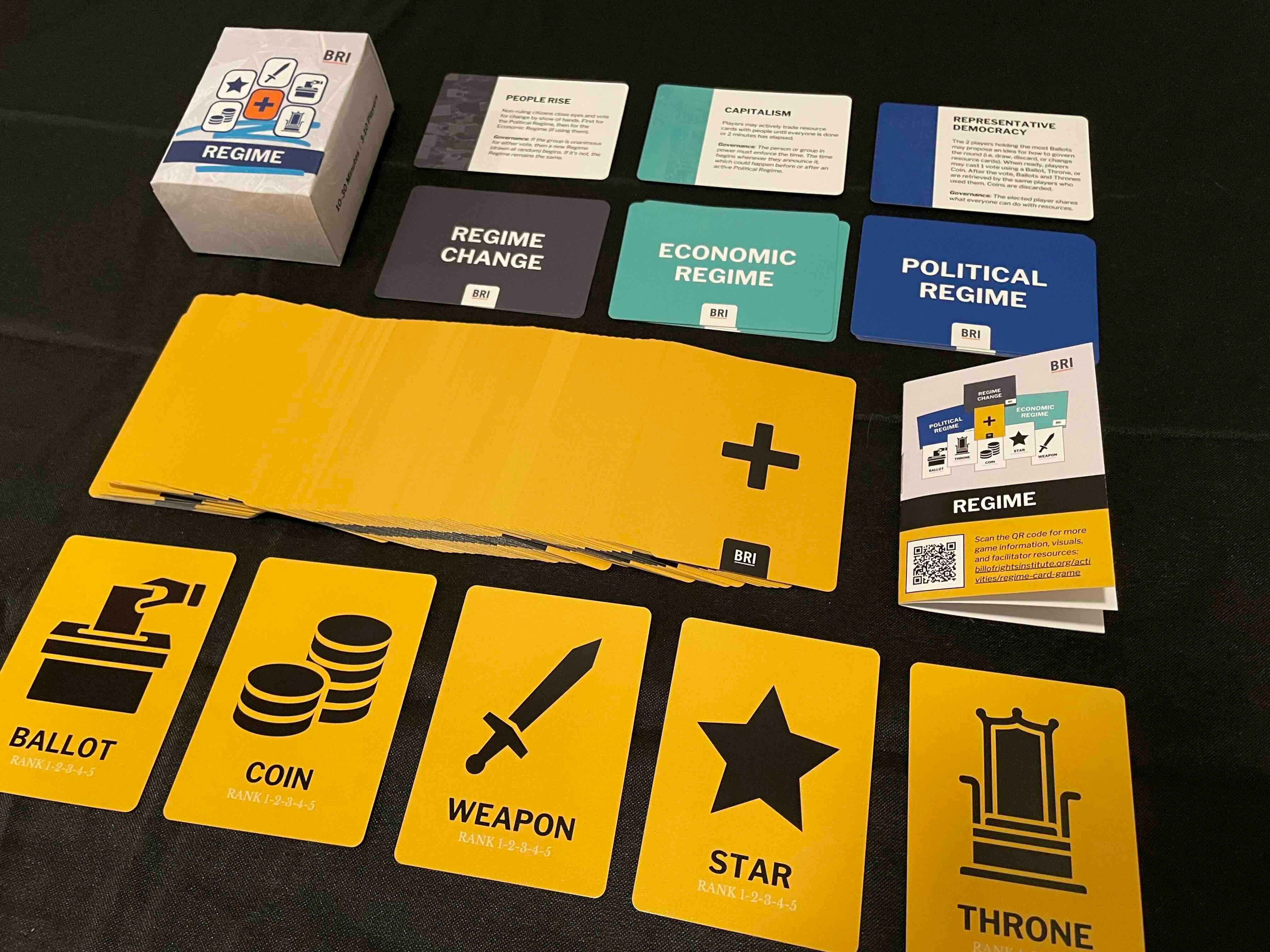
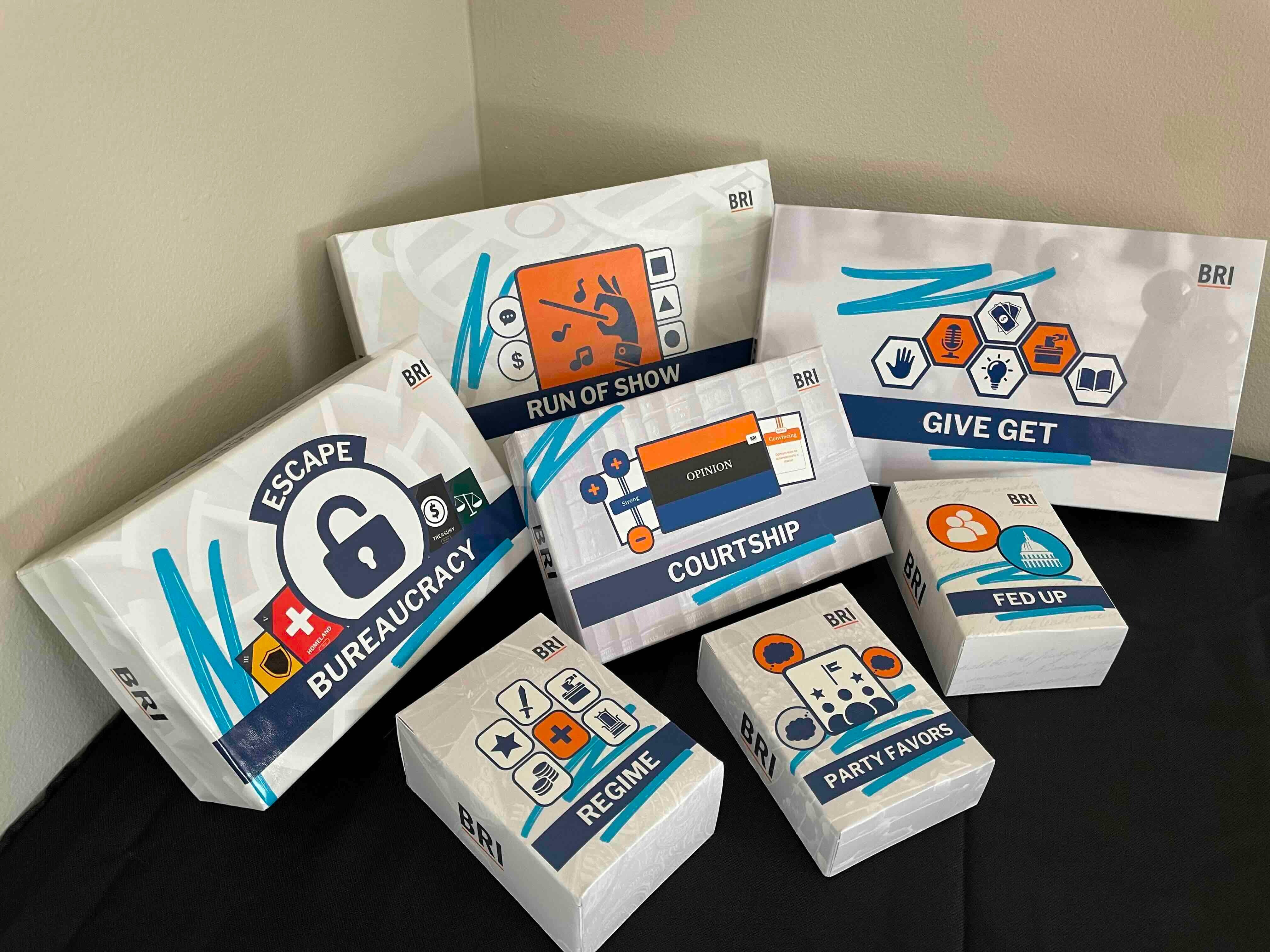
In July, CERL interviewed Peter Williamson, the founder and director of Game Genius, a nonprofit organization focused on teaching civics through games. Game Genius has collaborated with civic organizations like the Bill of Rights Institute and the President Lincoln’s Cottage. Games designed by Peter include card games like “Party Favors” and board games like “Brave Ideas.” We sat down with him to learn about his approach to game design, what got him into civic education, and why games can provide an ideal tool for teaching a wide range of civic skills such as teamwork and media literacy.
*This interview has been edited for brevity and clarity

CERL: Can you talk a little about your background? What led you to create Game Genius?
Peter Williamson: My undergrad was focused on architecture, which is [about] space making, and geography, which is all around place making. Games are also a form of that. You immerse people in a world, you introduce them to characters or rules or some kind of system. As the game designer, you learn a lot about how people respond to that system. As the player, hopefully you can prompt them with the right type of reflection questions where they say, oh, yeah, that does actually have relevance in this other part of my life.
I pursued a childhood dream right after college and played golf professionally, traveling around the world for about six years. It got me thinking about being in entertainment: you are in a place of play, and people come and watch you. So I thought, “Wouldn’t it be cool if you could create more of those moments more locally? How do I bring back some of that architecture, geography, place, and space making to the Washington, DC area, and help organizations create those spaces for their constituents?”
CERL: What specifically attracted you to civic education?
PW: The organizations that reached out [to Game Genius] were much more civically inclined. I think they were finding that engaging people in that space was harder than they wanted it to be. And play is a form of trying to get [people] to engage, right?
For a game designer, civics is a system. Like, different regimes are out there. There are different ways that the rules are built and that you are supposed to follow. And so it is kind of like playing a big game.
I think there is a natural synergy to seeing a civic system and going, oh, let’s talk about laws and the legislative body, right? And how can you create a little system in a game that really helps people poke holes in it, or helps them reflect around a particular part of that process?
Bill of Rights Institute has a methodology, which is [that] there [are] the skills… the knowledge, but then there’s the disposition. And that disposition is what we played with a lot. It’s like, how do people show up? What makes them feel included …[or] excluded? When are they having fun? When are they not? Who is the person who’s facilitating or hosting the game? What energy do they need to bring in order for people to engage?
CERL: Are there challenges to designing civic-themed games?
PW: A lot of the work I do, aside from civic games, is thinking more holistically around what parts of games attract people. I’ve always wanted to bring a game that is the silver bullet that everyone loves. But I have over time realized that that is harder than you think. If you put a group of 20 students in the room, it’s pretty unlikely that all of them are going to align. And so it is more important to . . .bring three, four, five games into a space and see who steps forward and who steps back.
On the other side, there’s the skills, the game dynamics, the things you have to do to be good at a game. Risk taking, emotional intelligence, taking initiative, listening, problem solving, conflict resolution – all of these skills that you could transfer to any job, any part of your life. They’re in games too.
CERL: Do you have any favorite games?
PW: I really like bluffing games. When you put people who are book smart with people who are street smart into a bluffing game, all of a sudden the tide shifts in a strategic thinking sense. It’s like, who is the more aggressive, who is the more forward-thinking?
CERL: Do you think bluffing mechanics can be a way to teach media literacy?
PW: I think so. I think bluffing as a basic game mechanic is all about how much can you get away with, right? And if you are the person who is doing that, you learn how much are people willing to take before they’re like, “this credibility is dropping really fast,” or “I’m always going to call their bluff, even if they’re not bluffing, I’m always going to call it because I just don’t trust them anymore.”
So, yes, I think with the right reflection questions, bluffing can be very effective. I think if you don’t unpack it, it can be very detrimental because it can destroy trust very fast.
CERL: I think that kind of speaks to one of the big tensions in civic education. We want people, to an extent, to trust the system. But on the other hand, we also want to encourage skepticism.
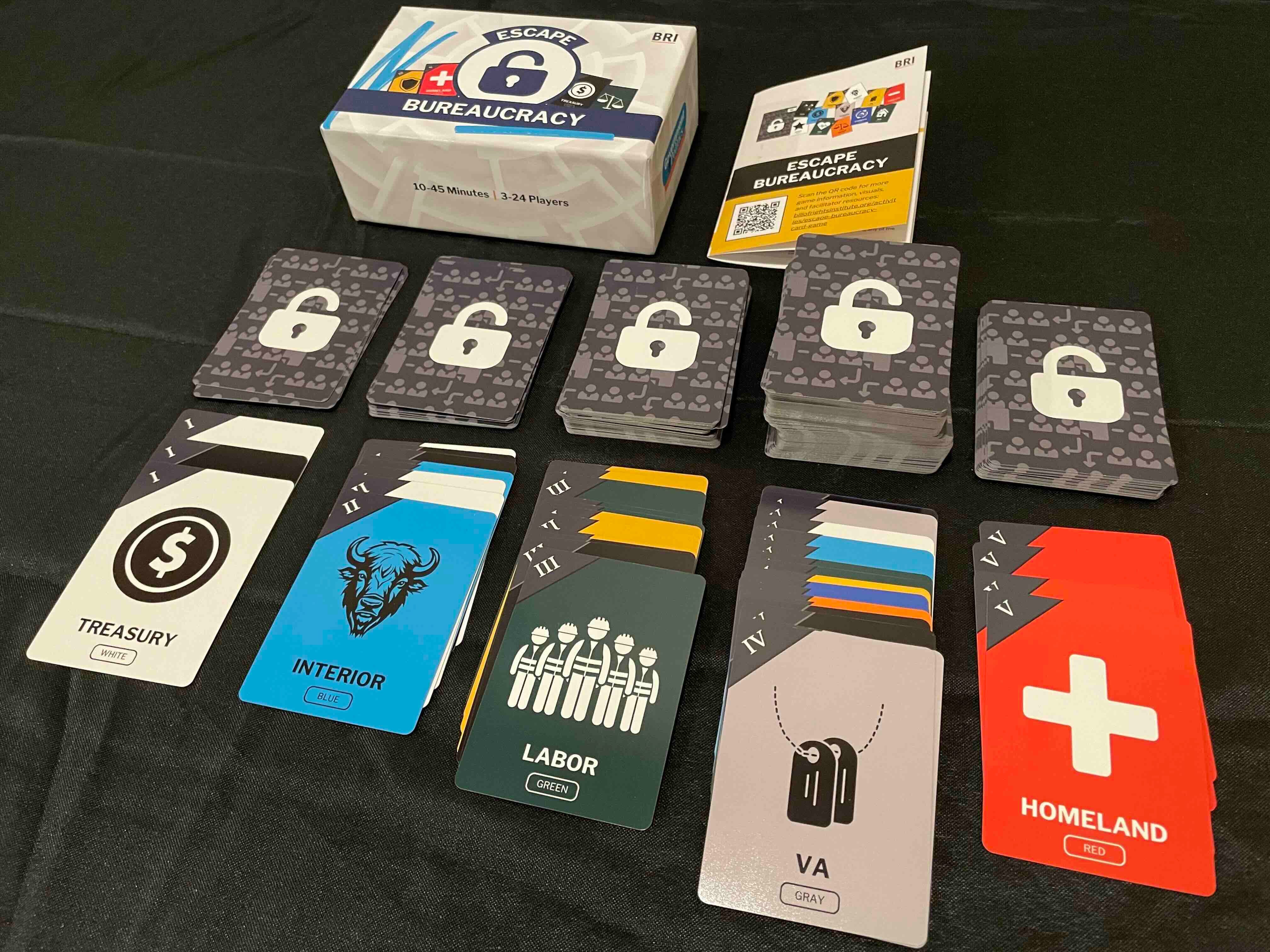
PW: I mean, look at the big contentious thing at the beginning of this administration. The DOGE concept. Like, if you ask people, just flat out, is there too much overcreep in the government? I think a lot of people probably would have said, yeah, there’s probably some bureaucratic systems that got a little too big, a little too slow. But there’s a way to go way over the line of, “Well, let’s just cut everything and see what happens.” I think a facilitator, which is a lot of the role that I play with games, is helping tease that out.
A teacher, I think, does the same thing. If they know the types of questions and the ways that a conversation can go, they can guide people toward a path that makes sense. I found doing things with intention to be a prudent way of facilitating games.
CERL: We usually think of gameplay as an adversarial experience. But you’re talking about it more as a group experience.
PW: If you think about it, a sport is a really great example of both team and competitive play. If you watch basketball or team sports, you’ll see over time certain dynasties or certain teams start to dominate leagues because they have the skill sets on the team, but they also have the culture. There’s some really cool examples of someone who came from sports to see a team where they may not have a specific superstar, but yet they outcompete everybody because they know how to work together. That to me is super interesting, especially when it comes to civics.
CERL: What makes games an ideal way to talk about civic education?
PW: It’s a system. When you engage with different kinds of systems, I think you build a better understanding of how better ones can be created or amended.
I always think exposure and experiential learning is really powerful in that way. But like anything, if you don’t make time to make sense of it, it oftentimes will just fall aside. So ask that question. Be curious. [The] Socratic method is very much dear to my heart. So any way that you can help people reflect on what they just did, I think that’s helpful.
Peter Williamson is Co-Founder and Partner at Barometer XP, a Washington, D.C. company that uses play to build workplace culture and learning, and the founder of Game Genius, a nonprofit bringing play-based work to the DMV social sector. A former professional golfer who competed on international tours for five years, he now designs games and facilitation tools that help teams work better together. He holds a BA in Studio Art and Geography from Dartmouth and lives in Ellicott City, Maryland, with his wife and two-year-old son.
— Interview by Paul Sullivan, CERL Research Associate

I assumed that this article would be about iCivics, as their games seem to be by far the most used in the field of civic education. I hadn’t heard of Game Genius and their games that they think can affect civic knowledge, skills, and dispositions. As there is no research evidence cited in the article I suppose that no research has been done as to their educational effectiveness. At this stage, with significant research having been done on civic education programs that have been shown to enhance those aspects of civic education, I’m less inclined to be interested in these particular games. They might be great or they might be fun or they might not be any of those things, given the lack of evidence on civic learning. Much more high quality research needs to be done across the entire field.